Easy festival food ideas: cooking without a fridge
AI-assisted English translation of the German guide. Illustrative images are AI-generated, not product photos. Numerical claims from the original are contextualised, and safety advice has been clarified. We have not tested this equipment ourselves.
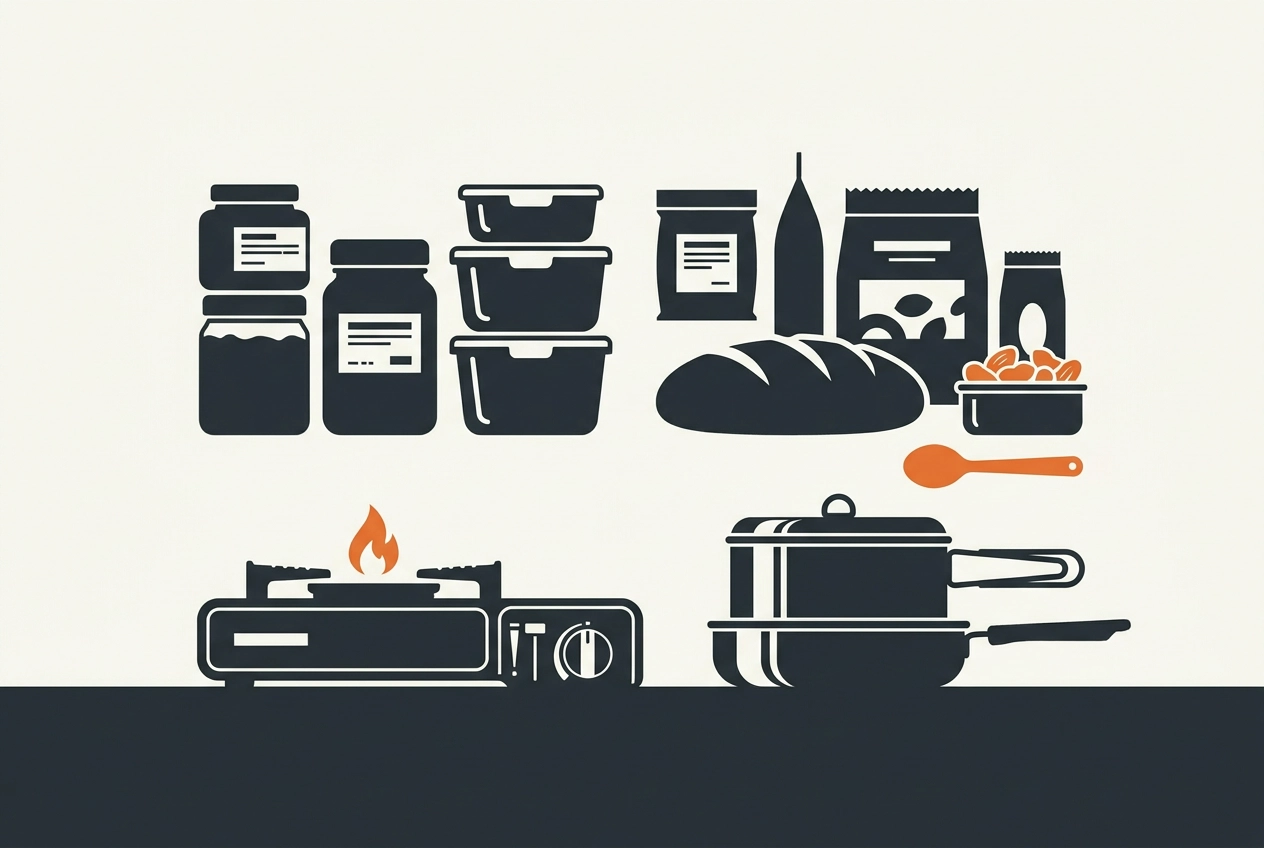
You know the feeling: your first night at the campsite was far too short, the bass is still thumping in your head, and suddenly your stomach is louder than any stage.
Here's how festival food works without fridge stress. First the golden rules of camp cooking – shelf life, minimal gear and doing the chopping at home. Then the tasty part: a quick energy breakfast, an easy lunch on the go and a warm one-pot dinner to share with your crew. Energy-dense snacks such as cereal bars, dried fruit and nuts are worth their weight in gold.
We also explain why you should never cook inside your tent and what really belongs in your festival food box. By the end, your festival menu is sorted.
Festival food without fridge stress: how it works in the field
Car packed to the roof, tent pitched in a strong wind, first night at camp – and your stomach rumbles louder than the bass from the stage. This is the moment that decides whether your weekend is great or three days of lukewarm tinned ravioli.
At a festival, cooling is scarce, power is rare and your gas stove has exactly one burner. You still don't have to live on soggy tinned food. You just need recipes that work with minimal gear, little water and no cold chain.
No fine dining, no eighteen sauces – just ideas that still work with mud on your fingers and wind blowing from the stage. New to camping? Our camping for beginners guide walks you through the basics.
Transparency: the basics on shelf-stable food are based on German consumer advice centre guidance (Verbraucherzentrale: buying and storing food safely, in German). Quantities, times and recipes are our own TripSquad suggestions, not independently tested content.
The golden rules of festival cooking
These rules get genuinely good food out of a basic camp. For more recipes, see our festival food guide.
Rule 1: shelf life beats sophistication
Buy food that survives several days without cooling: tinned beans, chickpeas and sweetcorn, plus pasta, couscous, oats, crispbread and rice cakes. Add cured sausage such as salami or chorizo, and fruit and vegetables for the first few days.
Rule 2: minimal gear, maximum effect
A single-burner gas stove, a pot with a lid, a bowl, a pocket knife and a small board cover almost everything. Every extra means more weight and more dishes to wash with precious water. Better to use one pot well than regret bringing three. See which equipment suits you in our camp kitchen guide.
Rule 3: chop once, benefit several times
Cut vegetables at home into airtight boxes, mix a vinegar and oil dressing, and portion out oats and nuts. At the campsite this saves time, rubbish and arguments.
Bonus: pack your cool box cleverly
Ice packs on top, drinks pre-chilled, everything airtight rather than loose. That keeps the little cold space free for perishable food. Pack meat and dairy first and eat them first.
Bonus: keep an eye on weight and leftovers
Carry less and waste less: plan smaller portions and use up leftovers on the last day. Spare couscous becomes a salad, beans become chilli, vegetable scraps become a wrap.
That's the foundation. Now for the good stuff: breakfast, lunch and dinner.
Breakfast and energy boost: full before the first band
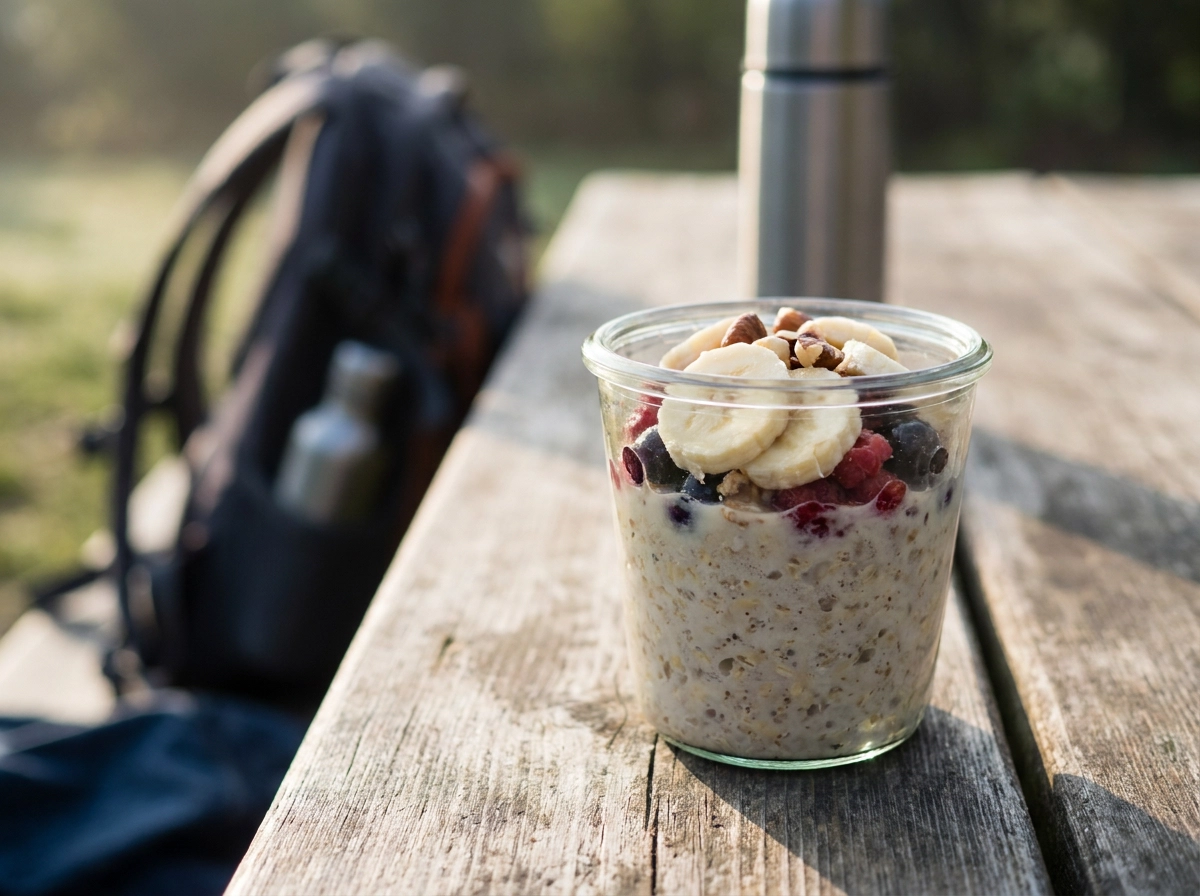
Hungry before the first band? Make breakfast a job for the night before. Five ideas that fill you up without standing at the stove for long.
Overnight oats in a jar
Put oats, milk or a plant-based drink, yoghurt, banana, apple and nuts or nut butter into a screw-top jar in the evening, leave to soak overnight and eat cold in the morning. Starting amount for your first try: about 60 g oats and 150 ml liquid (TripSquad suggestion). No cooking needed, and your one burner stays free for coffee. Milk and yoghurt still belong in the cool box or in the shade overnight.
Scrambled egg wrap from the gas stove
Egg mix, grated carrot, cheese and a tortilla. Cook the eggs all the way through, not just until they set – salmonella is only killed by thorough heating (BfR, in German). Alternatively, bring hard-boiled eggs. Fill several wraps at once and the whole crew is fed quickly. Suitable stoves are covered in our camping gas stove guide.
Energy snacks for in between
Cereal bars, dried fruit, nuts and nut butter: light, shelf-stable and quick energy. They fit into any jacket pocket and save you when the food truck queue wraps around the corner again.
Cold porridge without cooking
Soak oats in water or juice, add apple or banana and sprinkle with cinnamon. Perfect when you can't face the stove in the morning – and a good emergency breakfast on departure day.
Meal prep for the crew
Fill the dry ingredients into zip bags or jars the evening before and label them with names and meals. In the morning, just add liquid and stir. Six people, six jars – no scramble for breakfast.
Quick lunch: no cooking or just one pot
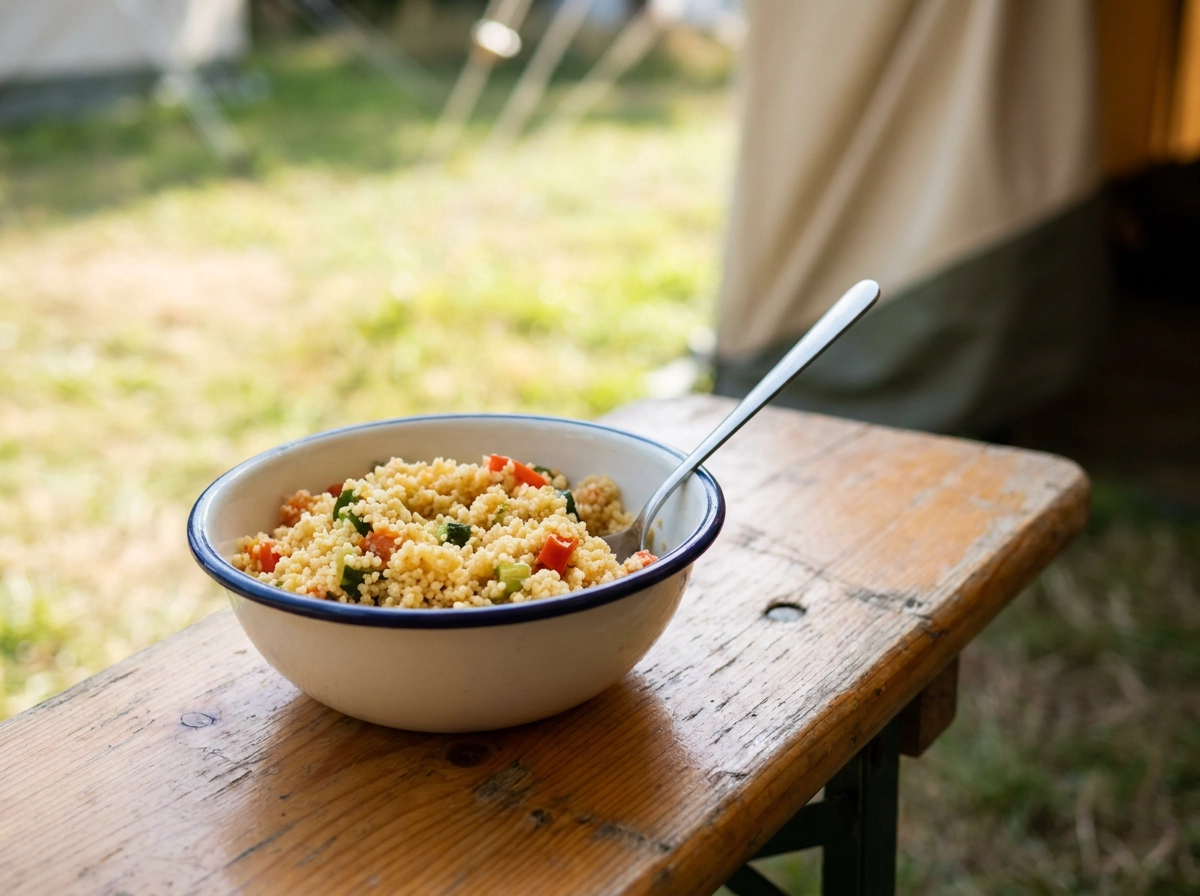
Breakfast done, the first band is calling. Until dinner you don't want to stand at the stove or queue at a food truck. Five lunches, cold or with one burner.
Couscous salad, the champion of simplicity
Soak couscous in cold water at roughly 1:1. Add diced vegetables, tinned chickpeas and a vinegar and oil dressing. It keeps for a few hours in the shade, tastes good lukewarm or cold, and the box can come to the stage with you.
Hummus and vegetable wraps
Tortilla, hummus, cucumber, carrot, pepper and a squeeze of lemon. Wrap in foil or a beeswax wrap, put it in your backpack, eat. No cooking and hardly any washing-up.
One-pot pasta salad
Cook pasta in the morning, let it cool, then mix with pesto, tinned sweetcorn and tomatoes. Ideal when the stove is free and the crew is still asleep. In hot weather, eat it soon and keep the box in the shade, not in direct sun.
Apple and carrot salad with beetroot
Apple, carrot and jarred beetroot with a dressing you mixed at home. A vitamin boost and the best trick for getting vegetables into a crew that only dreams of chips.
Dry fallback for long queues
Crispbread, rice cakes, cured sausage and cheese cubes. Don't fancy queuing? Your lunch is already with you. Note: raw cured sausage and raw-milk cheese are risky for pregnant people, small children and people with weakened immune systems (BfR, in German).
The big campsite dinner: one pot, made for sharing
The first band is playing and stomachs are rumbling at camp. Now you need one pot that's enough for everyone.
One-pot pasta for the whole crew: pasta, passata or tinned tomatoes, onion, garlic, spices and water all go into the pot together. Lid on and simmer until the pasta is cooked – the starch makes the sauce creamy on its own. Guide for six people: 500 g pasta, about 1 l liquid and 2 tins of tomatoes (TripSquad suggestion; adjust to your appetite). Transfer opened tins straight away; they're not meant for storage.
Chilli, with or without meat: tinned beans, chickpeas and sweetcorn, onions, spices and optional mince or plant-based mince. For festival beginners, the meat-free version is the safe choice – meat needs reliable cooling and quickly becomes a risk in the heat. Add coconut milk and curry powder and your chilli turns into a curry.
Coconut curry from the pot: chickpeas, coconut milk, curry powder and optional jarred spinach. Warming, filling and still tasty on the third evening (around ten minutes cooking time – TripSquad experience). Perfect when rain is drumming on the tent.
Sharing is the real trick: pasta, beans and couscous feed several people at once. Cooking for the crew usually costs less than everyone buying from food trucks. Agree beforehand who brings what, who cooks and who washes up – otherwise one person ends up doing everything.
Then wind down: camping chair, blanket over your legs, music drifting over from the stage. Good food after a long day is the best reset.
Please don't cook in your tent: gas stove safety
Dinner was great, but the pot is still hot and the ground is uneven. Before you carry on in the half-dark, here's the quick safety check.
1. Never cook inside a closed tent. Gas stoves produce carbon monoxide, which is colourless, odourless and tasteless. In a poorly ventilated tent it can be deadly. Cook outside or under an open-sided gazebo, keeping well away from sleeping bags, mats and clothes. A flame that goes out by itself can be a warning sign of too little oxygen.
2. Set the stove up stable and sheltered from wind. Pots slide easily on uneven ground. Use a fireproof base and don't balance the stove on wobbly beer crates. Keep flammable bags, towels and children away from the hot pot.
3. Watch the cold chain. Return meat, eggs, dairy and leftovers to the cool box quickly. In summer heat the window is short, so plan perishable ingredients for the first days, not for Sunday. Check food safety details in advance with the German Federal Institute for Risk Assessment (BfR). In autumn it's more relaxed, as our autumn camping guide shows.
4. Hygiene keeps you fit. Wet wipes, hand sanitiser and your own water bottle are basic kit. Use little water for washing up, dry dishes thoroughly and don't leave anything open where insects and dust can land.
5. Leftover rule for the last day. As a rule of thumb, we recommend throwing away anything that has stood in the sun for a long time. Plan smaller and drive home on Sunday without stomach drama.
Packing list and gadgets: what really belongs in your festival food box
So you don't walk to the car three times, here's the honest list: no luxury, just what the recipes above actually need. Want it as a checklist for the whole group? Use our interactive packing list.
Cooking and eating
Gas stove plus a spare cartridge – it's always empty when nobody checks
One pot with a lid, optionally a small frying pan
Bowl, chopping board, pocket knife or multitool
Mini spice kit with salt, pepper and chilli
Wooden spoon and washing-up sponge. Done – none of the recipes need more.
Cooling and storage
Cool box with ice packs, airtight boxes for leftovers, zip bags and a few screw-top jars for overnight oats. Keep shelf-stable supplies separate from perishable food so you don't have to dig through the whole box every time. If you like, add a small power station for phones and lamps.
Hygiene and rubbish
Wet wipes, hand sanitiser, kitchen roll and bin bags. A rubbish bag clipped to the gazebo saves a lot of work later.
Planning for groups
A large pot for sharing, folding chairs, a gazebo as a cooking and eating area, and a list of who brings which dish. Cooking for the whole crew usually saves money compared with repeated food-truck visits.
Conclusion: your festival menu is sorted
Your festival kitchen is ready – gear packed, now you just need the plan. Think in three blocks: breakfast without cooking, lunch cold or from one pot, dinner shared. That way you never stand at the stove for long and still eat something decent every day.
Stick to shelf-stable basics – tins, dry goods and fruit for the first days – and you'll carry less and waste less. And the safety rule still applies: cook outside and keep perishable food cool.
Related camping guides
- Festival food guide: recipes and food that keeps without a fridge — more no-cool meal ideas and a shared shopping list.
- Camp kitchen equipment — choose stoves, cookware, water containers and cool boxes.
- Group festival packing list — plan quantities for your crew and share the list.
- Gazebos and weather protection — set up a sheltered cooking and eating area.