Autumn camping: what matters for memorable nights
AI-assisted English translation of the German guide. Illustrative images are AI-generated, not product photos. Numerical claims from the original are contextualised, and safety advice has been clarified. We have not tested this equipment ourselves.

For many people, autumn is when camping equipment goes back into storage. That can mean missing one of the most rewarding seasons for nights in a tent or van: clear air, mist in the valley, golden woods and a cosy campfire where fires are permitted. It sounds romantic, and it can be. But autumn camping takes more preparation than a summer weekend. That is what this guide is about.
We cover why autumn camping is underrated and what matters most: an insulated sleeping mat, clothing inside a sleeping bag, controlling condensation, pitch choice, wind protection and safe ways to stay warm. Then come cooking without a fridge, lighting for long evenings, differences between tents and vans, and a practical mindset for changeable weather. This is a beginner-friendly guide without the marketing talk.
Why autumn camping is an underrated adventure
Misty mornings, leaves underfoot and quieter campsites give the crew more room to enjoy the outdoors. That atmosphere is a big part of the colder season’s appeal.
Groups benefit from sharing equipment, preparing hot food and spending evenings together. Cold weather can turn a weekend of camping beside one another into a genuinely shared experience.
There is no point sugar-coating it: autumn is more demanding than summer. Days are shorter, weather changes quickly and moisture becomes a major issue. Knowing that in advance helps you avoid waking at three in the morning with a damp sleeping bag.
The focus is practical, robust solutions rather than expensive trekking kit. If you are new to camping altogether, start with our complete beginners’ camping guide.
The plan: sleeping mats and bags, cooking, lighting, van-specific issues and staying flexible when the weather changes.
The foundation: why your sleeping mat matters so much
Anyone who has shivered on the ground knows how important a mat is to a warm night. A sleeping bag alone cannot stop heat escaping into cold ground. Choose insulation for the whole set of expected conditions, including the ground beneath you, rather than judging by daytime air temperature alone.
Sleeping-mat insulation background (German)
The original describes problems with some self-inflating mats on frosty nights. Performance varies by model, not simply by mat type. Check the tested R-value: a higher value indicates greater resistance to heat loss.
Understanding sleeping-mat R-values (German)
The German guide recommends at least 3cm of solid foam or a down- or synthetic-filled mat, but thickness alone does not establish warmth. Choose a suitable tested R-value and inflate according to the manufacturer, not as hard as possible. In an emergency, spare dry clothing or bags may reduce direct contact with cold ground, but they are not a dependable substitute for proper insulation. Protect the torso as well as the rest of your body.
Remember both halves of the sleep system: the mat reduces heat loss to the ground, while the bag insulates around you. Our Camp & Weather Protection equipment ideas help you compare suitable options.
Using a sleeping bag: should you wear clothes inside?
With the ground insulated, the sleeping bag protects the rest of you. How you use it matters as much as what is printed on its label.
Roomy or tight: leave the insulation space
Dry clothing can help you stay warm, provided the bag is not so tight that layers compress its filling or restrict circulation. A roomy bag usually leaves more space for layers; a close-fitting mummy bag may be better with light, dry base layers. Choose for comfort rather than assuming either fully dressed or undressed is always best.
Likewise, a heavy rain jacket laid over the bag can compress the filling instead of improving warmth. Keep insulation lofted and follow the bag’s instructions.
Down needs room to loft
Unpack the bag early and gently shake it out. Down in particular needs time and space to loft after storage in a compression sack.
A liner can add comfort and keep the bag cleaner. The original mentions a silk liner weighing around 100g and a claimed 5°C warmth gain, but neither is universal: check the actual model and do not rely on that gain when choosing a safe temperature rating. Adjust the hood and draft collar without obstructing breathing. Prepare your sleeping area early, but keep the tent’s ventilation open.
Tent condensation: the quiet enemy of an autumn night
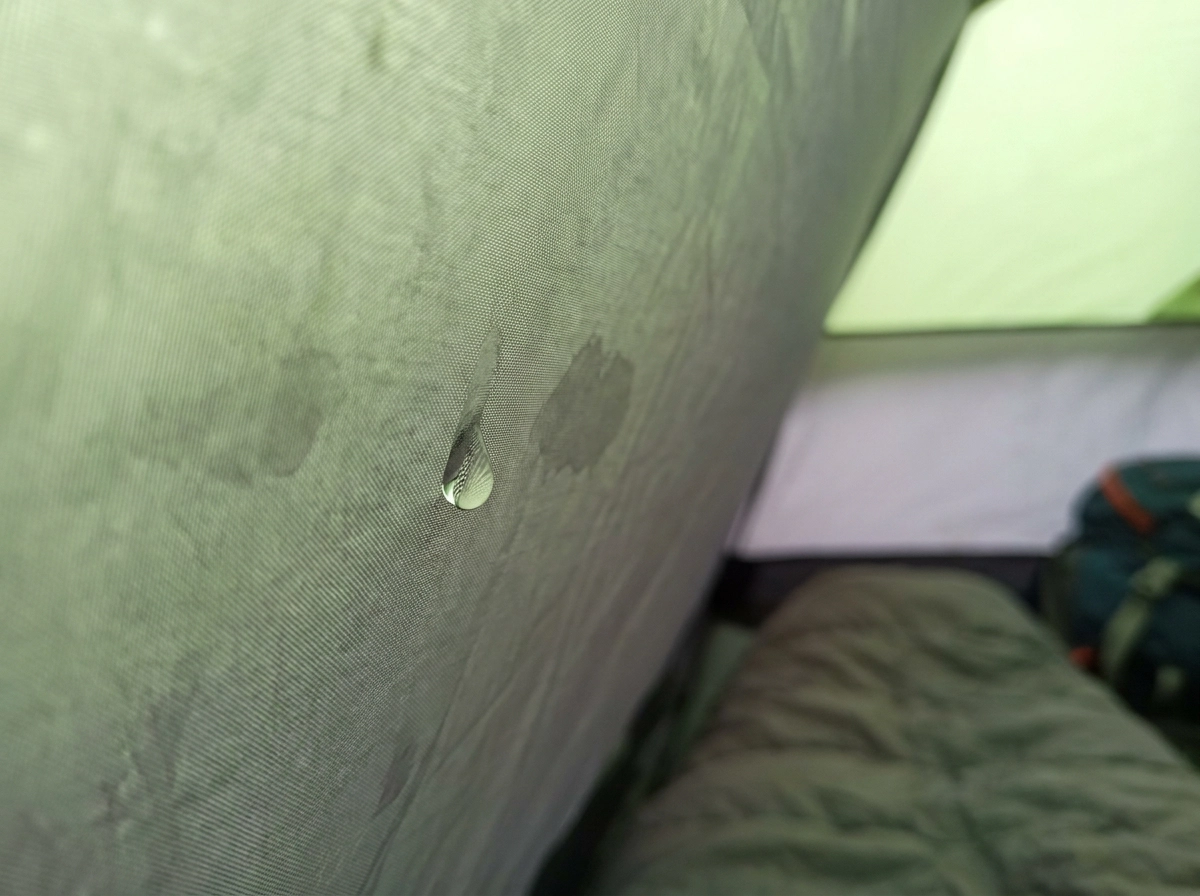
On cold nights, moisture from breathing and other sources can condense on tent fabric. By morning, damp surfaces and contact with the walls can wet your sleeping bag.
Keep the sleeping bag clear of the walls. If space is tight, position suitable bags or other gear to prevent contact, but do not block vents or exits. Keep food secured appropriately for local wildlife and use waterproof protection for anything that must stay dry.
Ventilation is still important when it is cold. Open the designed vents to help moisture escape rather than sealing everything up. Ventilation reduces condensation, though it cannot guarantee a dry tent in every condition.
Use dry periods during the day to air damp kit rather than packing it away wet. Avoid leaving equipment in a compression sack while it is still damp.
Ground, pitch and wind: where to set up camp
Pitch choice matters. Softer, well-drained ground may feel more comfortable than rock or snow, but grass, moss and leaves do not replace an insulated mat. Choose a legal pitch with good drainage and avoid damaging vegetation.
Natural wind protection can reduce exposure. A suitable hedge or terrain feature may help, but do not camp beneath unstable trees or branches. Orient and guy your tent according to its design and the expected wind.
For a group, keep the layout practical: tents with clear paths between them, a safely anchored communal shelter if conditions allow, and a separate social area. Any permitted fire must stay well away from tents, shelters and combustible kit. Our weather-protection guide covers group setups.
Check the pitch before building: avoid hollows where water collects and look up for dead or loose branches. Autumn winds make overhead hazards especially important.
A double-wall tent can help keep sleeping equipment away from condensation on the flysheet. Stability and correct pitching matter more than saving a little packed space. Once the location is sorted, focus on warmth.
Practical ways to stay warm safely
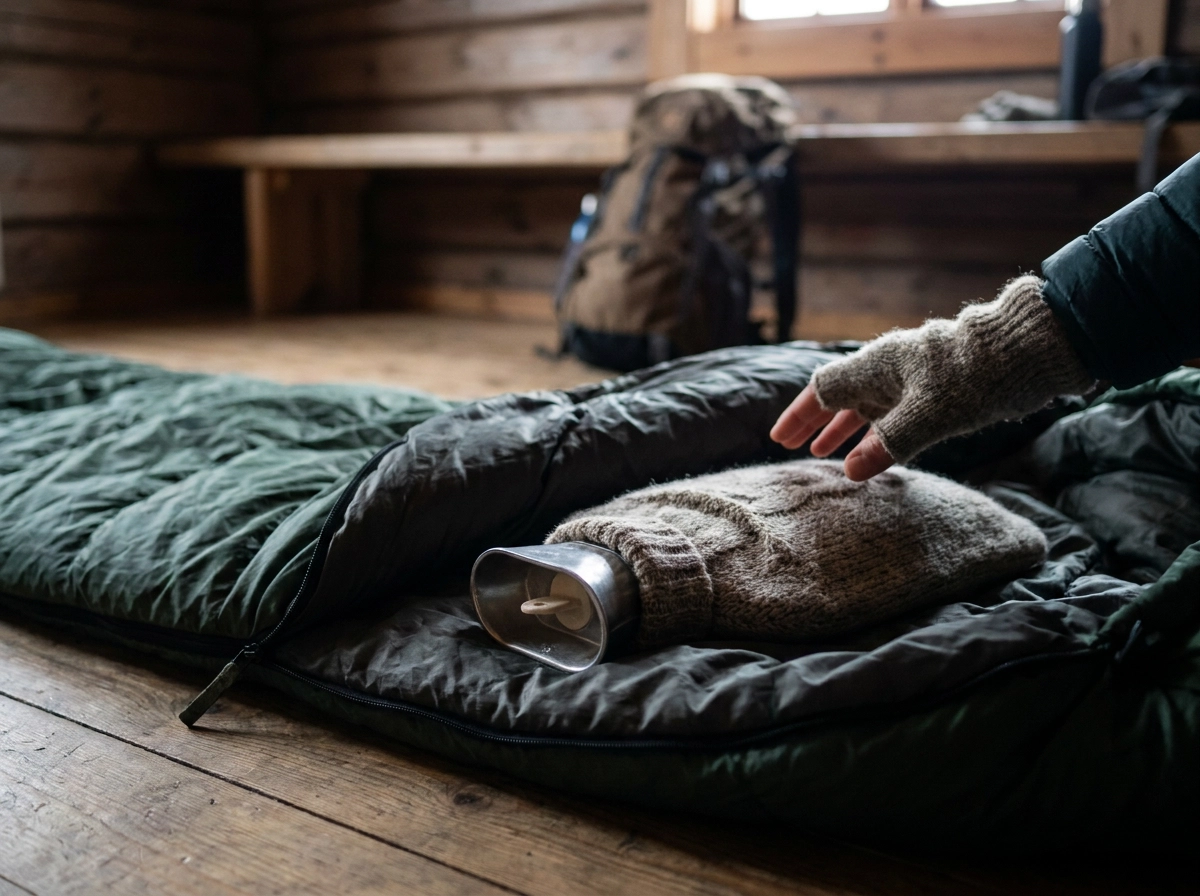
Even a good pitch needs a suitable sleep system. These small habits support it without replacing proper equipment.
Use only a purpose-made hot-water bottle according to its instructions, with a suitable cover and no boiling water. Check for leaks and avoid prolonged direct skin contact; do not improvise with a vacuum flask.
Wear dry socks, base layers and a hat if comfortable. Avoid tight layers that restrict circulation.
If pre-warming the bag, use only a product approved for that purpose and follow all warnings. Heat patches can burn skin and may be unsuitable while sleeping.
Take a short walk or do gentle movement before bed without working up a sweat. Alcohol can create a false feeling of warmth while impairing judgement; it is not a warming strategy.
Change out of wet clothes, keep the bag off damp ground and air sleeping kit in the morning before packing.
A well-prepared night makes the next challenge easier: breakfast in the cold.
Autumn cooking: hot meals without a fridge
On a chilly evening, the crew often wants hot food. Stews, curries, pasta, soup and porridge made from shelf-stable ingredients can be simple and satisfying. Plan adequate food for activity and cold conditions rather than relying on a salad alone. The original suggests keeping recipes to about three main ingredients where practical.
Gas stoves: use compatible wind protection
Cold conditions can affect fuel performance. Choose a stove and fuel approved for the expected temperature, use manufacturer-approved wind protection and take spare fuel. Store canisters as instructed and never warm them with flames, heaters, hot water or an enclosed windscreen. Our camping gas-stove guide explains the main options. Cook outdoors only, away from tents and enclosed shelters.
Cool boxes and supplies: planning without a fridge
Unopened shelf-stable pulses, couscous, rice, dried vegetables and tins are useful pantry ingredients; follow labels and refrigerate opened food where required. Keep a cool box shaded with suitable ice packs. Cold outdoor weather is not reliable refrigeration: monitor food temperature and avoid freezing items that must not freeze.
Hot water has several jobs
A pot of safely heated water can supply tea, coffee and washing up. Separate clean drinking water from used washing water and handle hot pans carefully.
The crew advantage
Share tasks and cook larger batches of stew when everyone will eat together. Do not leave cooked leftovers unrefrigerated for later. TripSquad’s festival-food guide has meal ideas and a shared shopping list, while the kitchen guide covers equipment.
Lighting: shorter days and longer evenings
After dinner, autumn darkness arrives quickly. Lighting is essential kit, alongside your mat and sleeping bag.
For lighting without a hook-up, consider the following:
A head torch with a low or red-light mode for nighttime tasks without dazzling neighbours.
A lantern for the communal area.
A small tent light so you can find things inside without searching in the dark.
Calculate battery demand honestly. A suitable power station or power bank may last several days, but runtime depends on capacity and usage. Cloudy autumn solar output is unreliable, so do not count on it as your main supply. Our power guide explains independent charging setups.
Make darkness safer: light walking routes, mark guy lines with reflectors or suitable lights and keep paths clear. Trip hazards are easy to miss in a crowded group camp.
For atmosphere, choose warm, low-glare lighting. Bright lamps aimed into neighbouring tents spoil the evening faster than cool weather does.
Van camping: what changes?
Lighting may be simpler in a van, but condensation still needs attention. Ventilate through the vehicle’s designed openings, using suitable rain protection if necessary, and do not obstruct safety vents.
Suitable window covers, insulation and floor coverings can improve comfort. Use materials appropriate for the vehicle without blocking exits, vents or heater components.
Heating requires particular care. Use only a correctly installed and maintained heater approved for the vehicle, following its ventilation and exhaust requirements, with an appropriate carbon-monoxide alarm. Never use open flames or an outdoor stove inside. Position the alarm according to its manufacturer’s vehicle-specific instructions, not a universal height such as the 1–1.5m mentioned in the original.
Use space carefully: keep warm clothes accessible, make converting seats to beds straightforward, and separate wet equipment from sleeping areas. Every centimetre counts, but access and ventilation must remain clear.
A practical mindset for changeable weather
A van offers more physical shelter than a tent, but either way autumn weather stays unpredictable. Have a safe Plan B: a suitable communal area, a different activity or leaving the site. A gazebo is not storm shelter. Check official warnings before you need the backup plan.
Rain can be part of the adventure when conditions are safe. Simple routines such as morning coffee, evening soup and a permitted campfire help the crew settle in. Music can lift the mood too, provided you respect neighbours and the site’s quiet hours.
Safety comes before pride. Leaving during storms, thunderstorms or severe-weather warnings is not a failure. No photo or evening around a fire is worth unnecessary risk. Share tasks, check how everyone is coping and act early if someone is getting dangerously cold.
Conclusion: make autumn camping your own
A positive mindset helps, but equipment and planning decide whether the trip stays comfortable. Remember four essentials: an insulated mat and suitable sleeping bag, moisture management, hot meals and reliable light, and flexibility when the weather changes.
If upgrading kit, start with the sleep system, a suitable flask for hot drinks and a head torch. Autumn rewards preparation: planning ahead beats improvising in the cold at night.
Use what you learn to improve the packing list for the next trip. TripSquad has more practical guides to tents, cooking and independent power, so your crew can prepare for the next cold-weather weekend without the marketing talk.
Related camping guides
- Sleeping equipment and protection from wind and rain — match your sleeping setup to night-time temperatures and keep clothing and bedding dry.
- Rain and mud camping packing list — prepare waterproof layers, spare clothing and equipment for wet ground.
- Head torches, camp lighting and off-grid charging — compare lighting options for longer autumn evenings; treat solar charging as a weather-dependent supplement.
- Simple hot meals for chilly camping days — find one-pot recipes and food that keeps without a fridge.