Which power station really suits your camping trip?
AI-assisted English translation of the German guide. Illustrative images are AI-generated, not product photos. We have not tested these products ourselves.
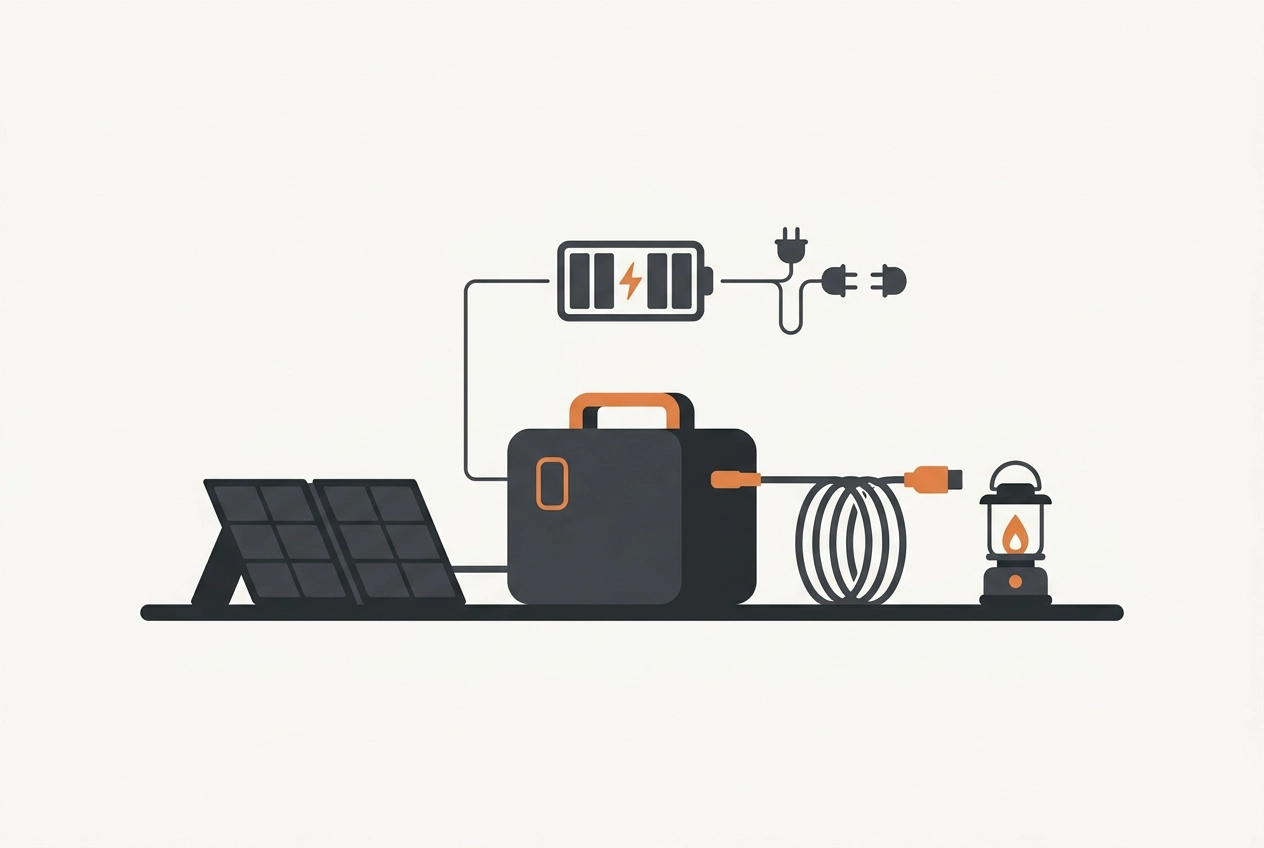
Camping in Germany is booming: almost 44.7 million overnight stays were recorded at campsites in 2025. It is no surprise that more of us want to combine an outdoor adventure with a few comforts from home. That raises a question many campers share: which power station really suits your camping trip?
You do not need an electrical engineering degree to keep your crew powered up. This guide takes you through what matters when choosing a camping power station: how much energy you actually need, the main capacity classes and which one fits your adventure. From a compact unit for phones and lighting to a larger setup for a fridge and an evening with the crew, we cover the options. You will also discover five common mistakes and how to avoid them, so you can make your own decision.
Why off-grid power is part of camping in 2026
Germany’s Federal Statistical Office recorded around 44.7 million campsite overnight stays in 2025, a new record and 4.2% more than in 2024. More campers also mean more demand for electricity. ZDF reports that prices rise with demand. Bringing your own power supply gives you more flexibility and means you are less dependent on expensive or fully booked electric hook-ups.
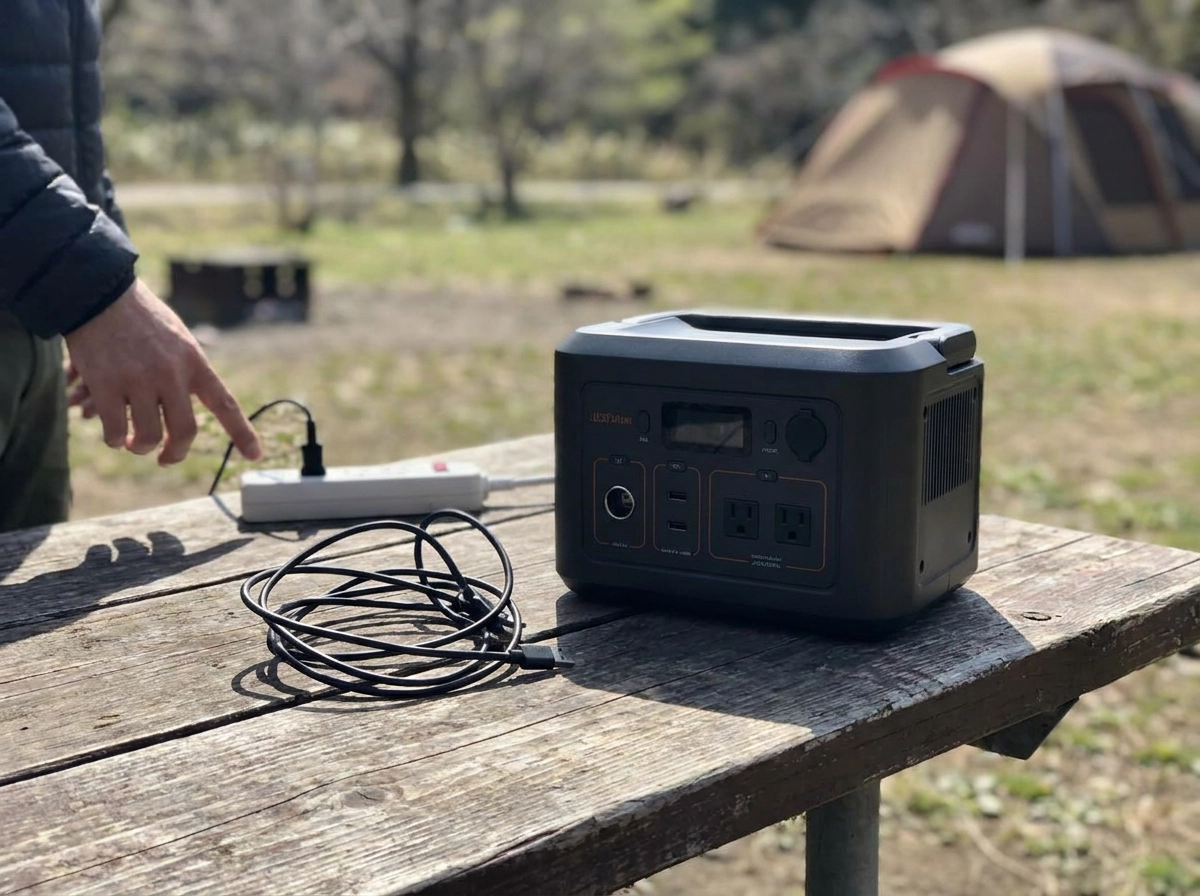
At festivals, power connections can be limited, expensive or unavailable, and extension leads or power strips may be prohibited. A power station offers a quiet alternative to a petrol generator, without exhaust emissions during use. Always check the organiser’s rules and the manufacturer’s instructions before using or charging it in a tent or awning: it must stay dry and well ventilated. At TripSquad, a power station is one part of an off-grid setup alongside our Power & Sound recommendations, solar-panel advice and lighting guides. Next, let’s calculate your real needs.
How much energy does your crew really need? An honest needs check
Before comparing power stations, calculate your actual consumption. The following figures from the original guide are rough planning examples, not guaranteed consumption values; check your own devices.
Smartphone: 10–20 Wh per charge. Bluetooth speaker: 20–60 Wh per evening. LED lamp: 5–15 Wh per night. Compressor fridge: 400–700 Wh per day, depending on the model, conditions and use.
Rule of thumb: watts × hours = watt-hours (Wh). Add a 20–30% buffer to allow for cold weather, battery ageing and conversion losses.
The crew multiplier: one phone per person, often a power bank too, plus shared devices such as a speaker, string lights and a fridge. Four people can quickly use 600–1,000 Wh over a long weekend with a modest setup; a fridge can push that much higher.
Example for four people over four days: fridge 2,000 Wh, lighting 200 Wh, phones 200 Wh and speaker 300 Wh — roughly 2,700 Wh in total. This shows why the Wh rating is a key buying criterion.
The classic mistake is comparing only watts. Watts tell you how much power a unit can deliver; Wh tell you how much energy it stores and help estimate runtime. Add your device list to the crew’s shopping and packing plans, including our food shopping list for four people over three days.
What matters when buying: capacity, output, solar and more
Capacity in Wh is the starting point for estimating runtime. Use your crew’s actual needs rather than marketing promises. Also check continuous output and peak or surge output: devices with motors, such as compressor fridges, can briefly draw more power when starting. The unit must support this, or it may shut down.
LiFePO4 batteries are commonly chosen for durability; manufacturers often quote 2,000–3,000 or more charge cycles. NMC/lithium-ion designs can be lighter but have different operating limits. Check the specific model’s specifications and safety instructions. UN38.3 testing concerns transport safety, not a guarantee of battery lifespan.
For recharging, check the solar input in watts and whether the unit has an MPPT charge controller. A 100–200 W panel can be useful at camp when sunlight is good, but actual charging depends on weather, orientation and compatibility.
Every kilogram matters on the walk from the car to camp. Check AC and DC outputs, USB-C PD, any built-in lighting, and whether an emergency backup or UPS feature meets your needs. Our Camp Kitchen recommendations can help you choose the fridge that will form part of your setup.
Comparing capacity classes: which one fits your crew?
Before browsing models, choose a class: compact, mid-range or high-capacity. That choice comes from your group size, the number of nights and your devices, not the logo on the case. An expensive unit in the wrong class can be less useful than a cheaper one that fits. Plan in this order: needs, capacity class, then model. The three classes below cover solo campers through to festival crews. In each case, check that the unit can power your largest load, usually the fridge. Put your devices in TripSquad’s interactive packing list before buying.
Compact class, up to around 300 Wh: phones, lights and small devices
A compact power station of up to around 300 Wh suits solo campers, weekend trips and festivals with little equipment. Depending on consumption, it can recharge phones, power banks, headphones, a toothbrush or a laptop, and run LED lights over several days.
Advantages: the original guide gives indicative weights of 2–6 kg and prices of €100–€250, not current offers or guarantees. Some units are small enough for a backpack and include USB-C PD or lighting; verify these features for each model. This class makes sense when you mainly charge small electronics. Start with our Power & Sound guide.
Limits: a compressor fridge may only run for a few hours. A crew evening with music and string lights can also stretch the capacity.
Who it suits: campers with low consumption, easy access to the car and no need for a second unit. Still check continuous output: some entry-level units deliver only around 200–300 W, which may not be enough for your particular devices.
Mid-range, around 500–1,000 Wh: an all-rounder for the crew
Compact units work well for solo trips and small electronics. With three to five people camping for three or four nights, capacity becomes more important. This is where the 500–1,000 Wh mid-range class comes in.
Suitable for: groups of three to five with phones, lighting, a speaker and a fridge as their main loads — provided their calculated consumption fits, or they can recharge.
Advantages: a small compressor fridge may run for one or two days depending on its consumption and usable battery capacity, with lighting and electronics adding to the load. The original guide cites indicative weights of 6–12 kg and prices of €300–€700. This can be a useful class for festival crews; verify current specifications and prices.
Limits: if the fridge runs continuously for several days, you will need recharging, for example solar, or a larger unit.
Who it suits: many of TripSquad’s typical crews. If you are undecided between compact and high-capacity, compare a mid-range unit with your energy calculation rather than assuming it will always be enough.
Important: the original guide suggests checking for at least 300–500 W continuous output and a solar input. Your actual devices may need more, especially at start-up.
High-capacity, from around 1,500 Wh: fridge, camp kitchen and crew evenings
For larger crews or a fridge that needs to keep running, units from around 1,500 Wh are worth considering. This class targets long festival stays and loads such as compressor fridges, projectors or guitar amplifiers.
Advantages: more stored energy, often several AC sockets, higher continuous output and sometimes an emergency backup or UPS function. The original guide gives indicative weights of 15–25 kg and prices of €900–€2,000. Runtime and features still depend on the chosen model and your consumption.
Limits: weight and cost. For a short weekend for two, this can be overkill and mean carrying unnecessary bulk from the car.
Who it suits: crews with a fridge, lighting and entertainment who need a larger reserve. Even a big battery can need recharging; calculate the full trip’s demand.
Important: compare the weight with the distance you need to carry it. Check whether two people can carry the unit safely. Otherwise it may end up staying in the car instead of powering the camp.
Honest buying advice: price, quality and what is worth paying for
Whichever class you choose, the original guide’s price ranges are only indicative: compact €100–€250, mid-range €300–€700 and high-capacity €900–€2,000. They are not live prices and have not been converted into pounds or dollars. Check current retailer prices, local availability and the final price before buying.
Be cautious about offers that omit capacity in Wh, cycle-life information, battery chemistry or solar-controller details, or make unrealistic promises. If surge capability matters for your devices and the manufacturer does not specify it, investigate before buying.
The original guide refers to tests of individual portable power stations by Stiftung Warentest and c’t, but the selection is limited. A specific review does not prove the quality of every model. Read the data sheet and look for genuine user experiences.
Look for clear warranty terms, stated charge cycles, relevant testing such as UN38.3, available replacement parts and support in a language you understand. Missing or unclear information deserves closer scrutiny.
An affordable unit may be enough for a weekend for two with low consumption and a suitable way to recharge in the car. Paying more makes sense when your actual loads demand it, especially a continuously running fridge. Next, let’s look at everyday festival use.
Power stations at festivals: four typical uses
Once you know your budget and capacity class, decide what the unit will actually do. Four common scenarios appear at many camps.
Crew kitchen: a compressor fridge for drinks and food, LED lighting over the cooking area and any electrically powered ignition equipment. The fridge is usually the biggest individual energy load.
Entertainment: a Bluetooth speaker, gazebo string lights, a projector for films or a guitar amp. These are feasible when output power and capacity fit the devices and group size. Choose useful equipment rather than disposable gadgets.
Phones, electronics and cameras: charging several devices, including a drone, navigation device or toothbrush. Check USB-C PD output as well as total capacity; fast charging and the right ports can be important.
Heating and cooling: a suitable electric blanket or fan may be practical if the unit supports it. A fan heater can drain a power station very quickly and may exceed its output. Electric heating uses a lot of energy per hour.
TripSquad tip: add the power station and solar equipment to your interactive packing list so the crew plans stored energy and recharging together from the start.
Advertisement · See solar-compatible power stations on Amazon* For longer trips: check the solar input, compatible panels and whether panels are included. Calculate your energy needs before buying. *Affiliate link to Amazon search results: As an Amazon Associate we earn from qualifying purchases.
Five common mistakes with camping power stations
Avoid these five mistakes so your festival setup does not run out of power sooner than expected.
1. Confusing watts with Wh. Watts describe output power; Wh describe stored energy. Looking only at watts can leave you with too little capacity. Calculate your needs in Wh.
2. Buying too little capacity. A low price is tempting, but the fridge may only last a day. Allow a 20–30% buffer and consider the next size up if your calculation calls for it.
3. Ignoring solar input. Recharging at camp requires compatible panels and a suitable controller. Without a way to recharge, even a large power station eventually runs empty.
4. Charging in a tent without checking safety. Heat and condensation are bad for batteries. Use a dry, well-ventilated place within the manufacturer’s permitted temperatures and instructions. LiFePO4 chemistry does not remove the need for these precautions.
5. Underestimating weight and size. A unit that feels manageable in the car park can be awkward on the walk to camp. Plan for the carrying distance before buying.
FAQ: common questions about camping power stations
Here are answers to five questions that often come up before buying.
How many Wh do I need for a compressor fridge?
The guide’s rough planning range is 400–700 Wh per day, depending on the model and outside temperature. Over four days that is about 1,600–2,800 Wh before accounting for your other devices and losses. Use your fridge’s actual consumption where available.
Is a solar panel enough for recharging?
In good sunshine a 100–200 W panel may cover some or much of a fridge’s daytime consumption, but not necessarily the whole night or the entire trip. Solar complements sufficient battery capacity; it does not guarantee continuous power.
Are power stations allowed at festivals?
It depends on the organiser. Check the camping rules and site regulations; restrictions on generators do not automatically mean battery power stations are allowed. Our group-camping guide helps you plan the rest of the setup.
Power bank or power station?
A power bank may be enough for a phone and camera. For a fridge and several shared loads, a power station with appropriate outputs is usually more practical. Some devices cover both roles, but their output power and capacity must match your needs.
How can I judge quality without a review?
Look for clear information on Wh, continuous output, charge cycles, battery chemistry, relevant safety testing and support. Missing information is a reason to ask questions, not proof that a product is suitable.
Conclusion: keeping your crew powered in 2026
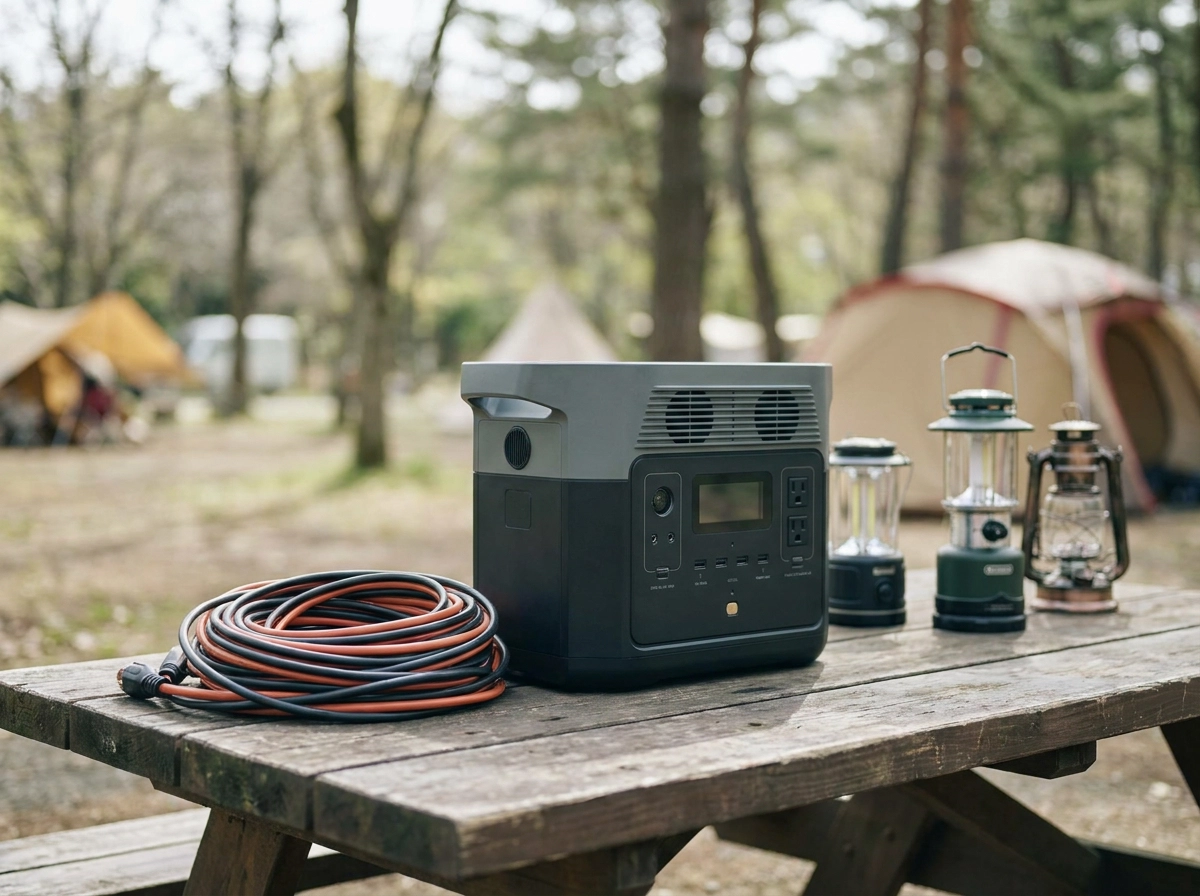
Start with your real energy demand, then choose a class. Compact units up to around 300 Wh suit low-consumption solo trips, mid-range units around 500–1,000 Wh can suit a typical festival crew with a suitable recharging plan, and units from around 1,500 Wh offer more reserve for fridges and camp kitchens over longer stays. These categories are a starting point, not runtime guarantees.
When buying, focus on capacity in Wh, continuous output in W, battery chemistry and solar input. Brand logos and big marketing numbers do not tell you your actual runtime. Plan recharging from the start, leave a buffer and consider a larger size if needed — but check the weight and carrying distance before choosing a high-capacity unit.
Now add your device list and solar equipment to TripSquad’s interactive packing list. With stored energy and recharging planned together, your crew can head into the 2026 festival season with less power-related stress.
Related guides
- Power & Sound: power stations, solar and lighting
- Camp Kitchen & Chill-out
- Interactive packing list
- Festival food and crew shopping list
- Group camping and weather protection